A rare disease is disease that affects very few people; they very often have genetic causes. The exact definition of 'rare' varies with 1 in 2,000 being used in Europe and 1 in 200,000 in the US. However, while the prevalence of each rare disease is low, there are very many of them, over 7000 according to UK definitions. This means, paradoxically, that a substantial proportion of the population suffers from a 'rare' disease.
From a statistical point of view care needs to be taken when studying rare diseases (or any rare pheomenon) as a random sample of the population will miss nearly all rare diseases; instead some form of stratified sample is usually required. The low base rate also means that diagnostic tests will suggest other more common diseases, misdiagnosing rare ones.
Used in Chap. 13: page 158
Also used in hcistats2e: Chap. 10: page 121
Used in glossary entries: base rate, stratified sample
Links:
 GOV.UK: The UK Rare Diseases Framework
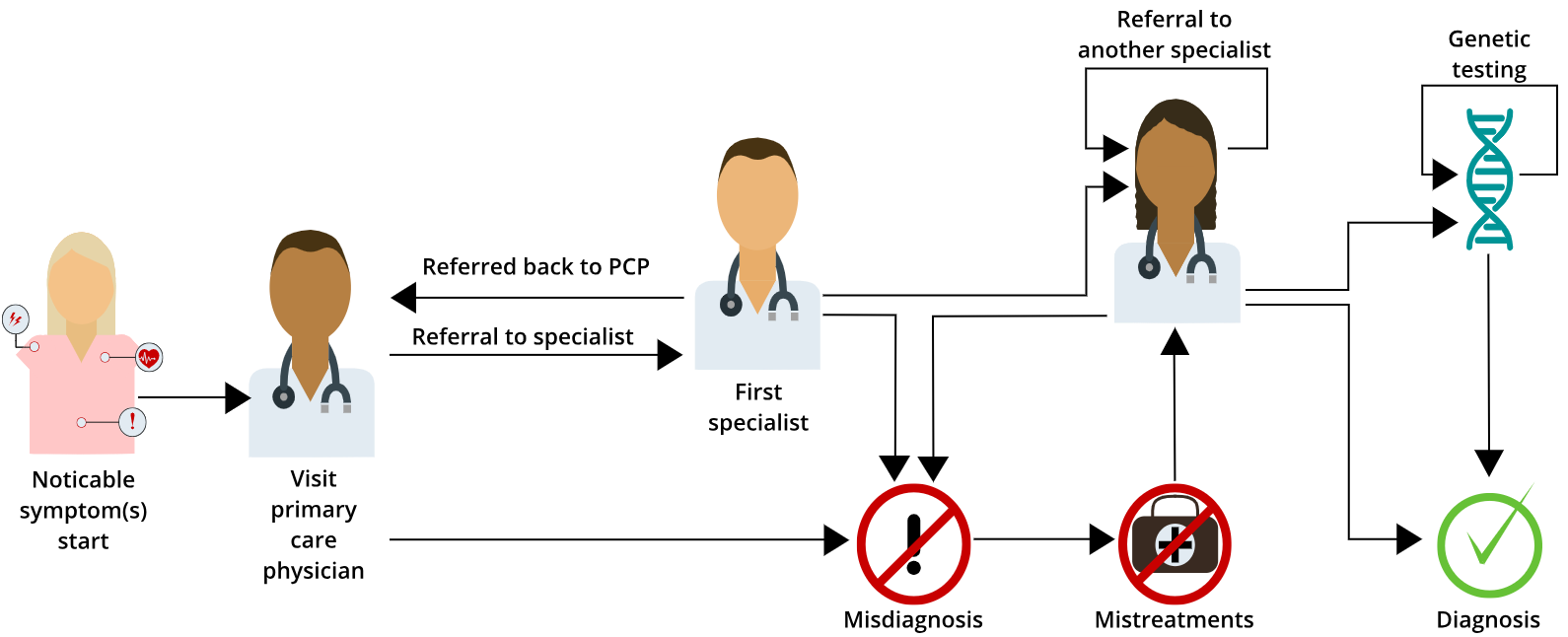
Image of patient journey for a rare disease from Case Study: Generating data for Rare Diseases, box in Chapter 10.